
The MacDonalds of Sleat and MacLeods of Dunvegan had been at each other’s throats for centuries. Peace seemed a dwindling prospect as the conflict continued. Bodies piled upon bodies. Blood seeped into the peat. And tatters of tartan littered the heather. All remnants of past battles, marking the dead until the wind swept them away and their names were forgotten to time.
Clan conflicts in Scotland were often achieved through raids into each other’s territory. Leading to an uncontrollable escalation since every attack warranted a response, usually more bloodthirsty than the last. However, there always came a point where someone had had enough.
For the past century, the feud seemed to be at an all-time high. In 1577, members of the Clan MacLeod had been set adrift in the Minch by local men from Eigg (territory belonging to Clan Ranald, a branch and ally of Clan MacDonald) after they had become overly friendly with the local women. The MacLeods landed on Eigg for revenge but found no one until a set of footprints led them to the Cave of Frances where the islanders were hiding. They set a fire at the entrance and dampened the flames, filling the cave with smoke; suffocating 395 of the inhabitants hiding inside, the only survivor was an old woman who was not hiding in the cave at the time of the massacre.
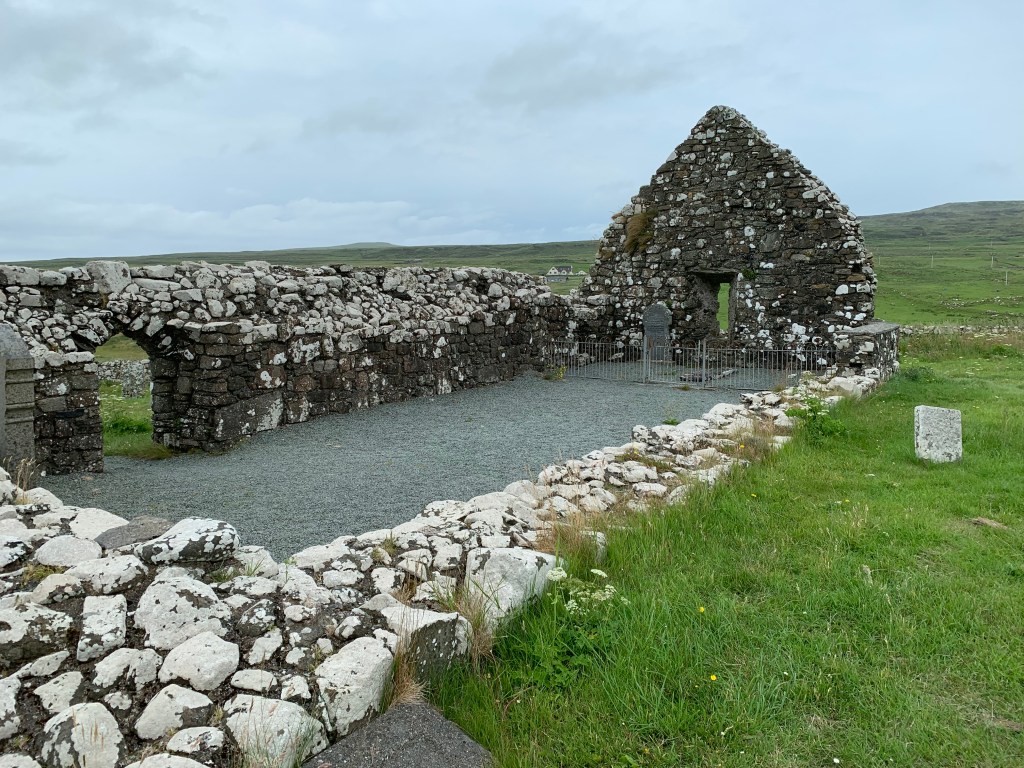
This led to another retaliation a year later in 1578, when the MacDonalds crept ashore at Ardmore Bay, barred the doors to Trumpan Church and set it alight, massacring MacLeod clan members while they worshipped, killing all but a young girl who had escaped through a window and raised the alarm. The MacLeods reacted quickly and killed the MacDonalds before they could escape (See Massacred at Mass: The Battle of the Spoiling Dyke).
Despite the death and destruction caused by the ruthless feud, the two clans had seemed to put their differences aside by 1594-95, when both clans sailed to Ulster to support Irish rebels against the forces of Queen Elizabeth the First. However, this was not to last.
After all this bloodshed, the tears, the death. The MacLeod chief, Ruaraidh, attempted to make one final bid for peace, possibly because of the break they had whilst fighting in Ireland. He offered to combine the clans in an act of marriage by giving his sister, Margaret, to Donald Gorm Mòr, the Chief of the MacDonalds (See Steel and Salt for another entry on Donald Gorm Mòr). He accepted and the two entered into a contracted marriage known as a “Handfast”, where a man and woman lived under marriage laws for a year and a day, or until a baby boy was born, ensuring an heir. If the handfast marriage proved to be unsuccessful, then the woman would be returned, and they would go their separate ways.
After a year and a day of their handfast marriage, Margaret had not conceived a child, and worse yet, she had lost the use of one of her eyes. This may have been a natural occurrence but given the violent and gruesome nature of Donald, as well as his upcoming reaction, it is highly likely it was an injury inflicted by him. With the contract broken, Donald sent Margaret home, however, adding insult to injury, he gouged an eye from a horse, a servant, and a dog, and sent her home to Dunvegan.
You could imagine the scene as she arrived. The one-eyed woman atop a one-eyed horse, led by a one-eyed servant and followed by a one-eyed dog. This was Ruaraidh’s last straw.
He declared all-out war on the MacDonalds and decimated their land on the Trotternish Peninsula. The MacDonalds retaliated and attacked MacLeod held land in Harris. Ruaraidh sent forty men to North Uist to attack Trinity Temple at Carinish, a church where goods had been hidden for safety, however, Clan Ranald, the Macdonald’s allies, had heard of the attack and sent twelve men, fifteen by the time they arrived, to attack them. As the MacLeods celebrated their raid with a feast in the church, the Ranalds attacked and slaughtered all but two MacLeods. This became known as the Battle of Carinish, which is assumed to be the last engagement in the British Isles that was fought with Bows and Arrows.
Donald MacIain ‘ic Sheumais, who led the Ranald raiders, returned to Skye to report his victory, however, during his return journey, he was forced to land at Rodel, Harris, because of a violent snowstorm. Ruaraidh MacLeod was at Rodel at the time and it just so happened that his young Page was Donald MacIain’s godson. Alerted to his godfather’s need for shelter, he took the opportunity to help when Ruaraidh saw the snowstorm and exclaimed that he would “not refuse shelter to his greatest enemy, even Donald MacIain ‘ic Sheumais”. Reluctantly and taken by his word, Ruaraidh showed Donald hospitality, and despite the greatest of tensions, Ruaraidh managed to avoid any violence.
In the middle of the night, the weather had cleared, and the wind was fair for sailing, so the young Page informed his godfather that he should depart for Skye, which he did. Not long before dawn, without the knowledge of their Chief, the MacLeod Clansmen snuck to the quarters where the MacDonalds had been sleeping and set fire to them, unaware of the MacDonald’s early departure. According to tradition, the MacDonalds caused further insult by having their piper play the tune “The MacLeods are disgraced”.
Following so much bloodshed and constant attacks, many Clansmen on both sides had been forced to resort to eating cats and dogs to survive since their lands and crofts had been ravaged by the raids. Donald Gorm Mòr decided to end the feud with a decisive battle and victory. As the MacLeod Chief was away, seeking assistance from the Campbells of Argyll, the MacDonalds launched an invasion into the MacLeod lands, taking the entirety of Minginish and Bracadale. They took the cattle from the MacLeod Clansmen who lived here and drove them to Corie na Creiche, a traditional refuge for raiders.
The MacLeod forces, led by Alasdair, Ruaraidh’s brother, mustered here and prepared for battle. Charging at the MacDonalds sometime late in the day. The battle was bloody, by far the bloodiest that Skye had ever seen. Where many medieval battles lasted only an hour or two, this one continued late into the night.
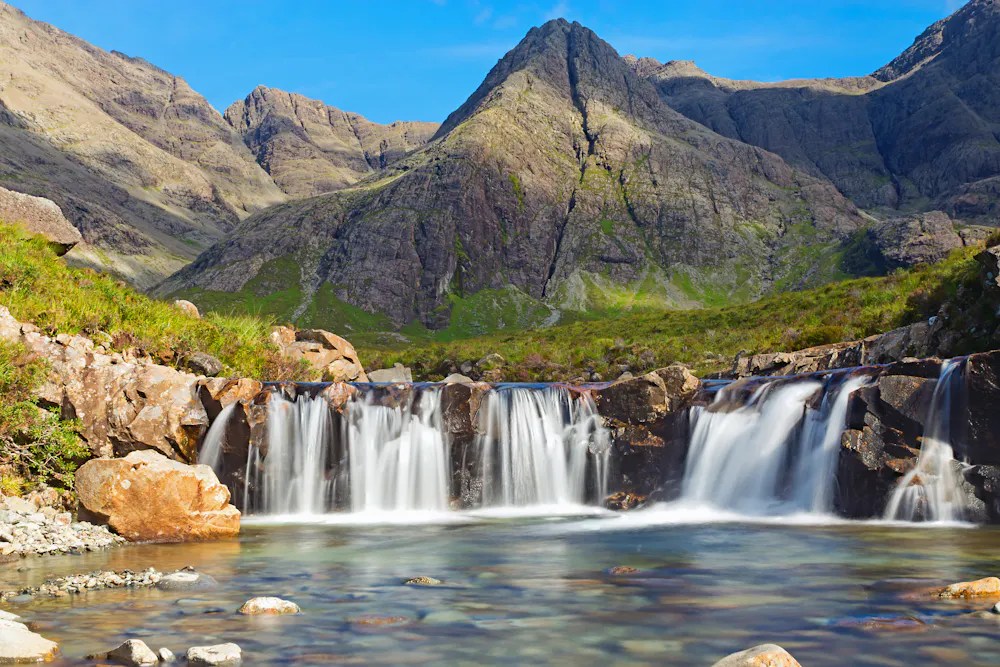
The MacDonalds proved victorious and the MacLeods were defeated, with thirty of them, plus Alasdair MacLeod, being taken prisoner in the aftermath. To this day no one knows how many died or were injured in the battle. Only that the Fairy pools, or Allt Coir a ‘Mhadaidh, ran red with the blood and tartan of the dead.
The battle was so bloody that it gained national attention across Scotland, and the feud between the MacLeods and MacDonalds had become so out of control that the Privy Council, Royal officers of Scotland whom the King relied on for advice, had to get involved to prevent any more bloodshed.
With Alasdair in the custody of his MacDonald captors, he refused to give up his arms until he was forced to surrender himself to the Earl of Argyll and Earl of Huntly so that negotiations for peace could take their course. The chieftains met with mutual friends and held meetings at both Eilean Donan Castle and in Glasgow so that peace could be made. Following the release of prisoners from the grasp of the MacDonalds in the latter half of 1601, as well as recognition for the insult that Margaret MacLeod had suffered and the offer for legal retaliation against her former husband (which seems not to have been taken), Skye was finally at peace.
A celebration was held at Dunvegan Castle which lasted for three weeks. Feasts and festivities replaced the bloody battles, and except for a brief flare-up in 1603, the MacLeods of Dunvegan and MacDonalds of Sleat never went to war again. At least, not against each other…
Sources:
Roberts, John Leonard. (1999). Feuds, Forays and Rebellions: History of the Highland Clans, 1475–1625. (illustrated ed.). Edinburgh: Edinburgh University Press.
Macdonald, Angus; Macdonald, Archibald (1900). The Clan Donald. Vol. 3. Inverness: The Northern Counties Publishing Company, Ltd.
Alexander Mackenzie. (1881) History of the Macdonalds and Lords of the Isles; with genealogies of the principal families of the name, Inverness: A & W MacKenzie
https://canmore.org.uk/site/11233/skye-coire-na-creiche
https://www.britainexpress.com/attractions.htm?attraction=725
https://www.bbc.co.uk/news/articles/c3gk210j814o
Images Courtesy of – https://hillcraftguidedwalking.com/2017/07/27/226-coire-na-creiche-and-the-fairy-pools/ and https://www.walkopedia.net/best-world-walks/United-Kingdom/Coire-na-Creiche
One response to “An Eye for an Eye: The War of the One-Eyed Woman, Skye’s Final and Bloodiest Conflict”
-

[…] had seen, needing royal intervention to end it (see two of my previous articles on this – War of the One-eyed Woman and Massacred at Mass). This particular battle, the Battle of Trouternes, has hazy (and often […]
LikeLike
 Ictis Heritage Research - Alasdair MacIlleathain
Leave a reply to Heads Under the Water: Snizort Cathedral, St Columba’s Isle and The Cauldron of Skulls – Alasdair MacIlleathain Cancel reply