When we think about slavery in the Roman world, it is often imagined in simple and dramatic terms: chained labourers, brutal owners, and constant suffering. While violence and exploitation were certainly part of Roman slavery, the reality was far more complex and varied depending on where a slave lived, what work they performed, and who owned them.
Roman slavery was also fundamentally different from the transatlantic slave trade and cannot be directly compared to it. Although colonial imperial powers often attempted to justify slavery by linking themselves to Rome or presenting it as a continuation of the Roman world, historians must be careful not to impose modern values or terminology onto ancient systems, as this can distort the historical record. For this reason, many historians prefer the term “owners” rather than “masters”, as it more accurately reflects Roman legal language and avoids modern associations.
It is also important to recognise that Roman slavery was not racial. In the ancient world, people became enslaved through warfare, piracy, debt, criminal punishment, or being born to enslaved parents. For the Romans, slavery was viewed as a natural part of human hierarchy and, more importantly, an economic necessity that supported the empire.
Roman slavery was not a single experience. Some enslaved individuals lived and worked in small households where they were educated, trusted, and integrated into daily family life, while others laboured in mines or on large agricultural villa estates under extremely harsh conditions. Despite these differences, all enslaved people shared one defining reality: they were considered property.
To be enslaved in the Roman world meant living without legal freedom and without control over your own life. This post explores what life was really like for Roman slaves, including how people became enslaved, their daily lives, treatment, and their chances of gaining freedom.
Becoming a Slave
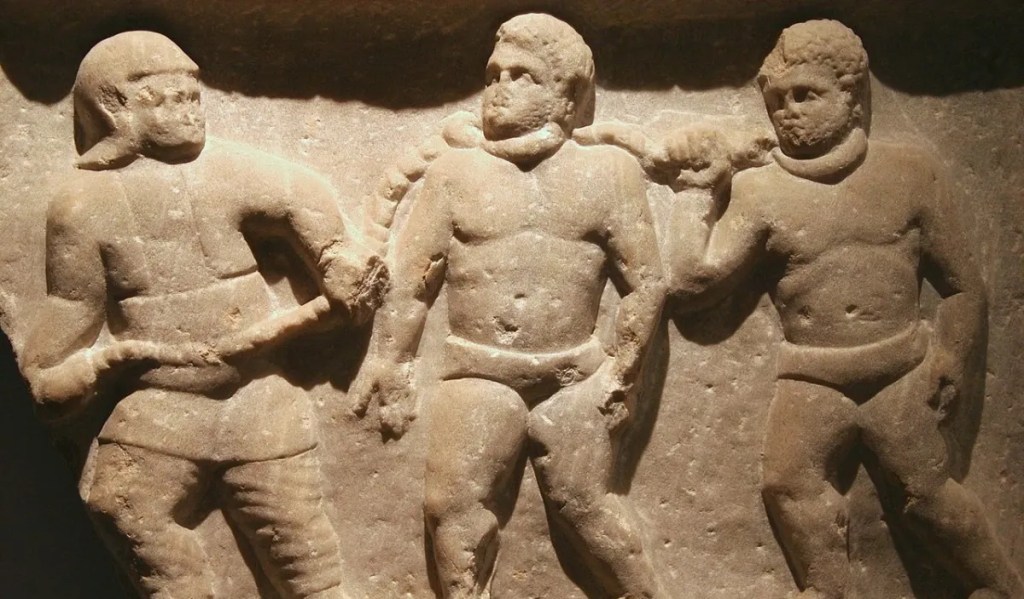
The Roman Empire was built on conquest, and warfare was the main source of slavery. When Roman armies defeated their enemies, they often captured hundreds or even thousands of prisoners who were then sold into slavery. In some cases, entire communities were enslaved.
This was largely driven by economics. Roman expansion was not just about territory or glory, but about wealth and resources. In the ancient world, “loot” was not simply gold or jewels, but practical economic assets. Slaves were extremely valuable: they could be sold for money, used to work farms and mines, and help sustain the empire’s economy and military expansion.
However, conquest was not the only way people became enslaved. Slavery could also result from piracy, kidnapping, debt, criminal punishment, or even abandonment. Exposed infants were sometimes taken in and raised as slaves, while pirates regularly captured travellers and sailors to sell in slave markets.
For many, enslavement was sudden and traumatic. One day, a person could be living freely in their community, and the next, they could be transported across the Mediterranean and sold to a household in a foreign land where they did not speak the language or understand the culture. It was isolating, degrading, and life-changing.
That said, as my own research into Roman comedy explores, this experience was not identical for everyone. Some enslaved individuals adapted to new social environments in complex ways, and their lives could develop in unexpected directions.
Daily Life as a Slave
Daily life for enslaved people depended heavily on the type of work they performed. There was no single experience of slavery in the Roman world.
Many slaves worked in Roman households, performing roles such as cooks, cleaners, tutors, scribes, nurses, personal attendants, and administrators. Interestingly, in a world where literacy was relatively rare, enslaved individuals may have made up a significant proportion of literate people in Roman society. Some, particularly Greek slaves, were already educated before being enslaved, while others were trained to fulfil intellectual roles within the household.
This created a fascinating dynamic. Education was a powerful tool in Roman society, and literate slaves could hold important responsibilities, despite their enslaved status. Roman comedy often reflects this reality, showing enslaved individuals growing up within households and forming close relationships with their owners’ families, sometimes almost like members of the household.
Household slaves often had better living conditions than others. They might wear better clothing, eat regular meals, and develop close personal relationships with those around them. However, their lives were still controlled by their owners, and they could be sold or punished at any time.
Agricultural slaves typically experienced much harsher conditions. Working on large villa estates, they would spend long hours in the fields planting crops, harvesting grain, tending animals, and maintaining land, often in intense heat and under close supervision. They lived in cramped accommodation and had limited contact with the outside world.
Overseers, who supervised agricultural labour, were often enslaved themselves. These individuals occupied a difficult position: they had slightly better living conditions and closer contact with owners, but their status depended entirely on productivity. If the workers they supervised failed to meet expectations, the overseers themselves could be punished, which often led to harsh and brutal enforcement of labour.
Large estates could contain hundreds of slaves, making individuals more replaceable. This differed from smaller households, where losing a slave could significantly disrupt daily life.
The harshest conditions were found in mines and industrial labour. Slaves working in silver or gold mines, quarries, mills, docks, or fullonicae faced dangerous environments, exhausting work, and constant risk of injury or disease. These roles were often effectively a death sentence due to the extreme conditions and lack of protection.
Treatment and Punishment
Roman owners had significant legal power over enslaved individuals. Slaves could be punished for disobedience, escape attempts, theft, poor performance, or even suspicion of wrongdoing.
Punishments ranged from beatings and chaining to forced labour and, in extreme cases, execution. Fear and control were central to maintaining the system.
However, treatment varied widely. Some owners treated slaves relatively well, while others were brutal. Roman comedy and historical evidence both show enslaved individuals forming close relationships within households, sometimes growing up alongside freeborn children or managing businesses on behalf of their owners, as seen in Pompeii.
This range of experiences highlights the complexity of Roman slavery: it could involve both harsh control and close social interaction within the same system.
Freedom and Manumission
One of the most distinctive features of Roman slavery was the possibility of freedom through manumission.
Slaves could be freed by their owners as a reward for loyal service, through a will, or by purchasing their own freedom if they had saved enough money. This created an incentive for enslaved individuals to remain loyal and productive.
However, manumission was not always a sign of kindness. Some owners freed slaves at the end of their lives to improve their reputation or to be remembered positively.
Once freed, enslaved individuals became freedmen or freedwomen. They gained legal freedom, although they were not fully equal to freeborn citizens. Their children, however, could become full Roman citizens.
Freedpeople often remained socially and economically connected to their former owners, sometimes continuing to work for them or receiving support for businesses and trade. Many became craftsmen, traders, or business owners, building new lives after slavery.
Freedom also came with challenges. Freedpeople lost the security of accommodation and food provided by their owners and had to support themselves independently.
Despite this, freedom was deeply valued. The majority of funerary inscriptions were created by freedpeople proudly declaring their status, showing how important freedom was to their identity and social standing.
The Reality of Roman Slavery
So what was it really like to be a Roman slave?
It meant living without legal freedom and without control over your own life. Experiences varied widely, from relatively stable household environments to extreme hardship in mines and agricultural estates, but all enslaved people lived within a system that treated them as property.
Roman slavery was not just an economic system, but a social structure that shaped the lives of millions across the empire.
Understanding Roman slavery helps us see the Roman world more clearly, not just as a civilisation of emperors and armies, but as a society built on the labour of enslaved people.
If you are interested in Roman history and the realities of life in the ancient world, you can explore more articles at AlasdairMacIlleathain.com or get in touch about talks, writing, or research projects.
Images:
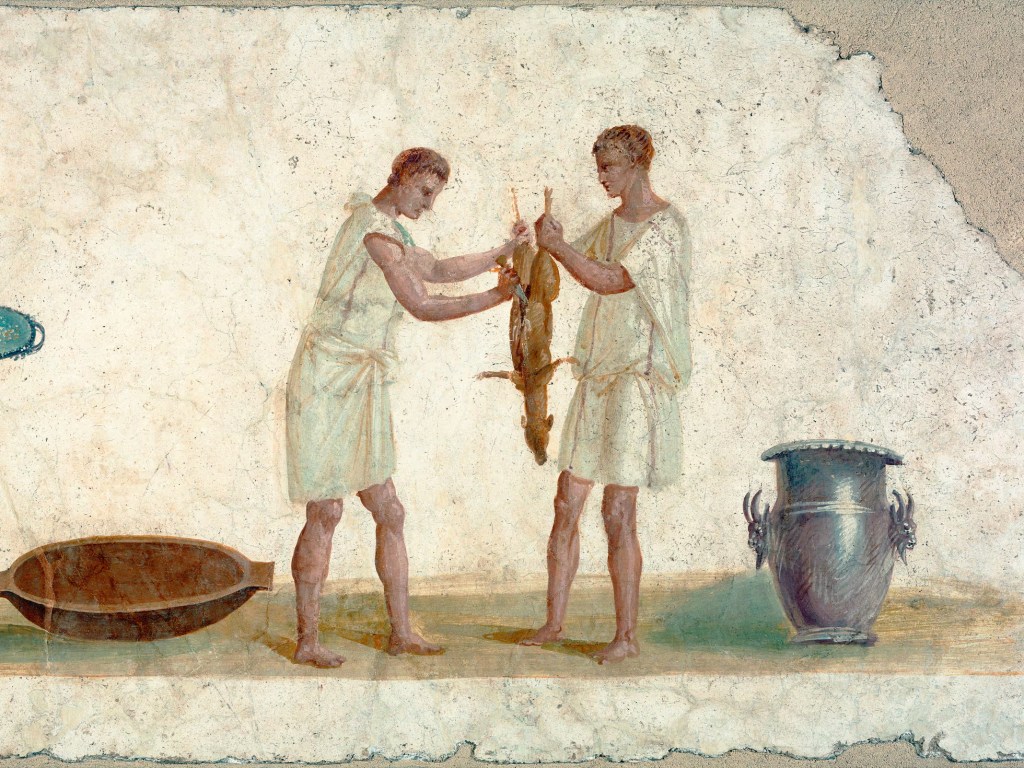
Cover Image – A fragment of a 2nd-century Roman fresco, housed in the Getty Museum in California, depicting two slaves disembowelling an animal.


 Alasdair MacIlleathain

Leave a comment